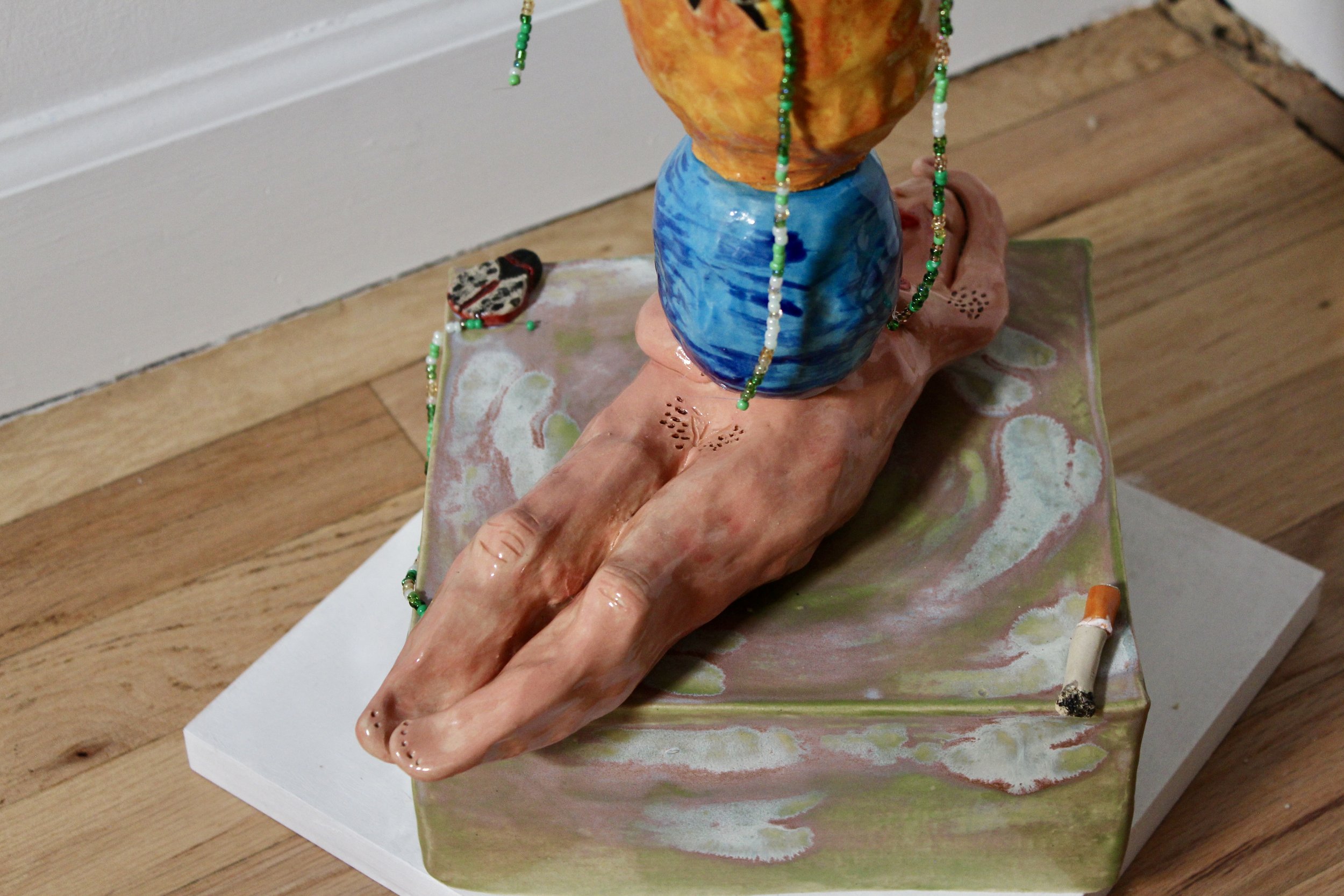
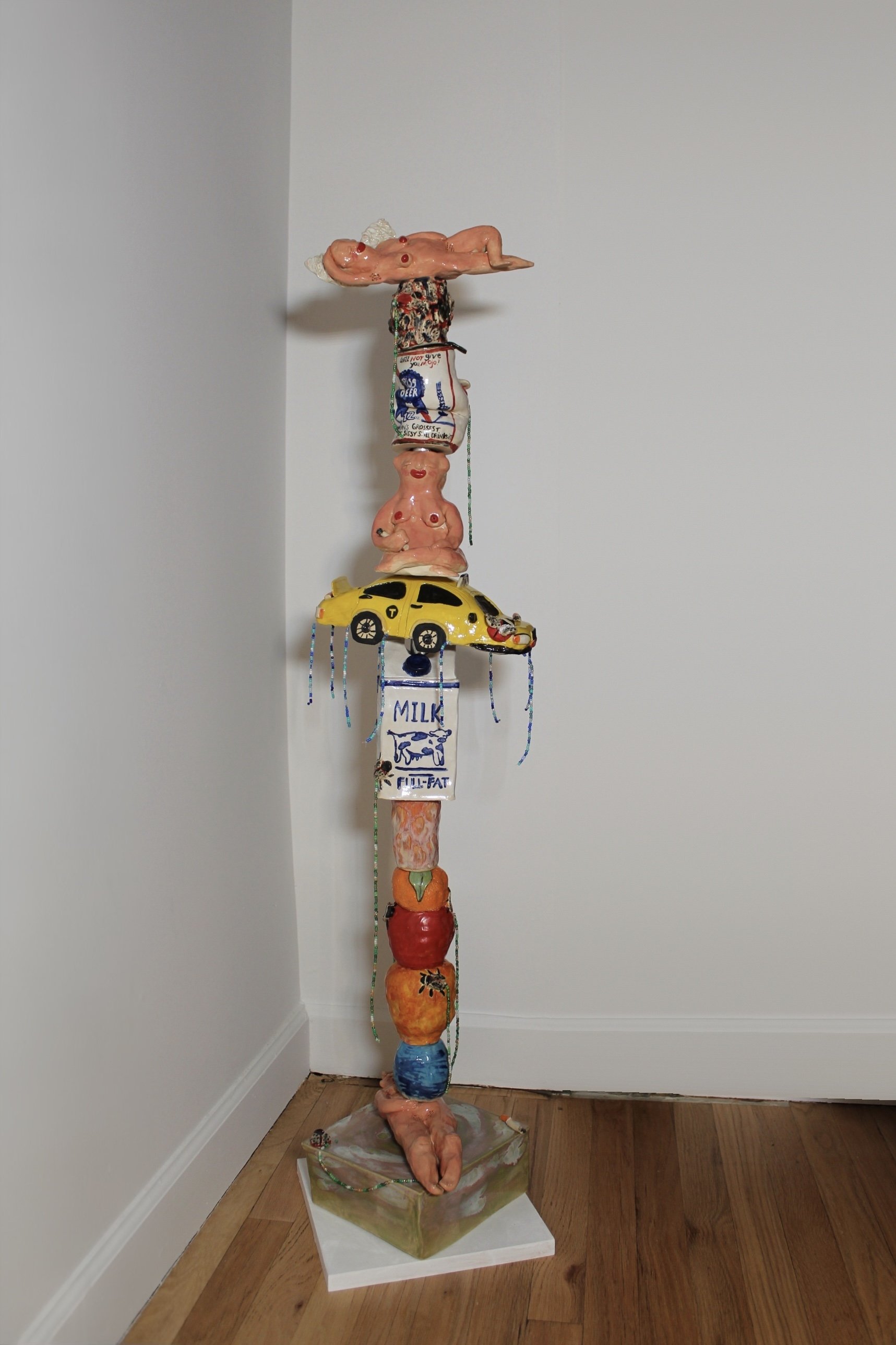
honey dew (BUGSHIT) 2026
45”x10”x10”
ceramic, steel rod, beads, clear thread, epoxy, wood board
“I can’t believe bug shit is called honey dew. ironic. And all the spotted lantern flies in their best debutant gowns, parade around breweries and vineyards. Here I am, in my Sunday best, sweatpants and no bra and my weed pen. At least they aren’t targeting big cannabis.”
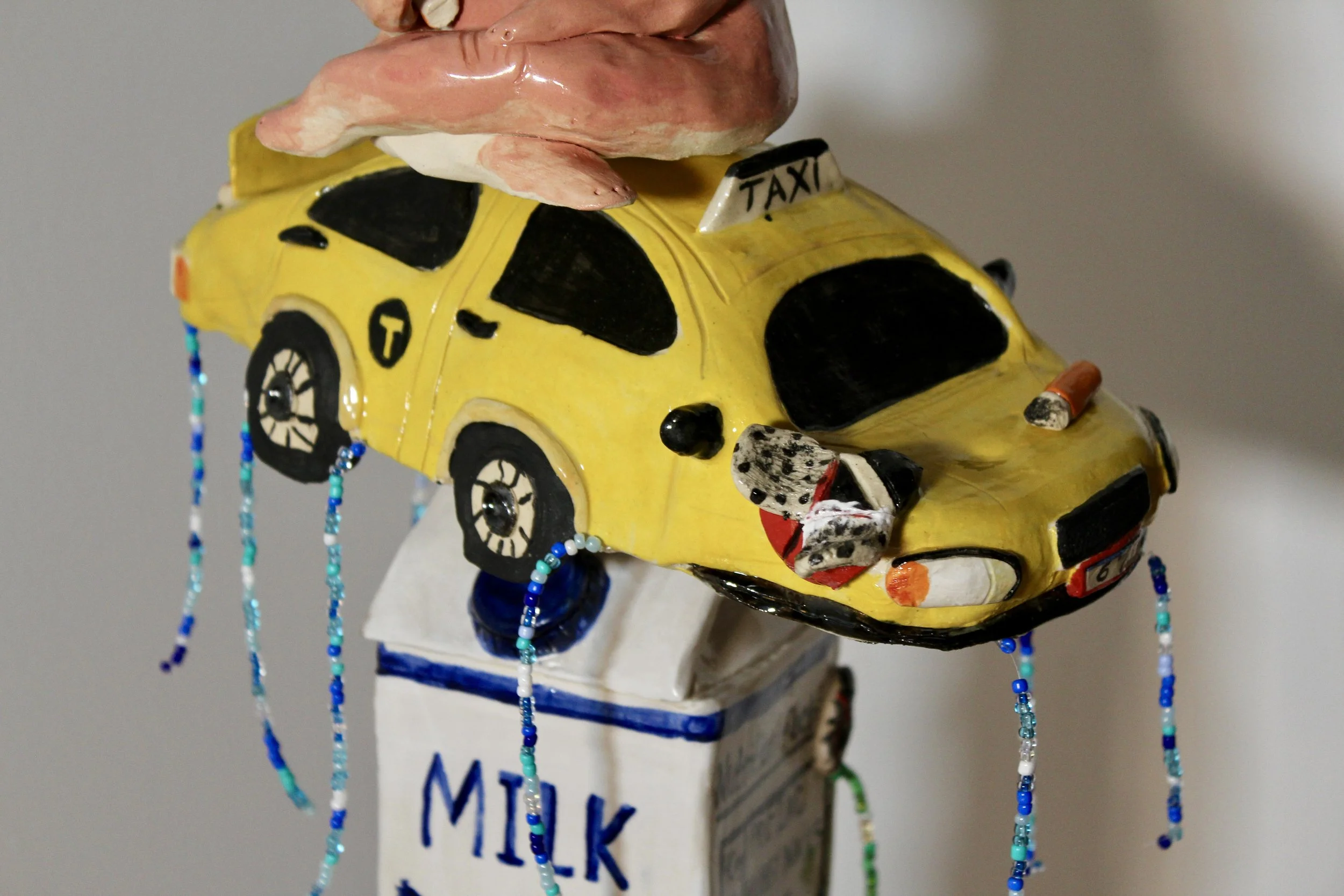
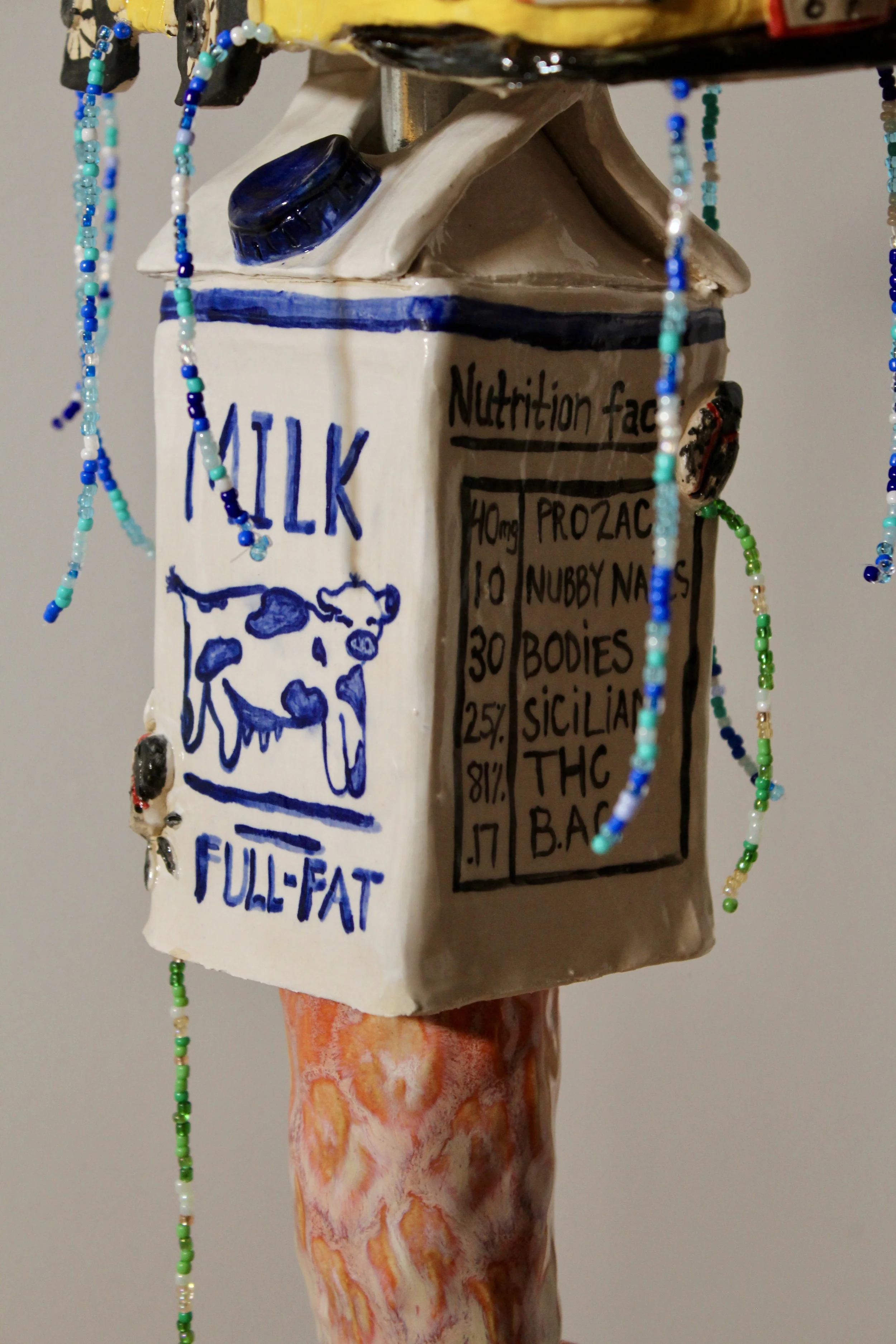
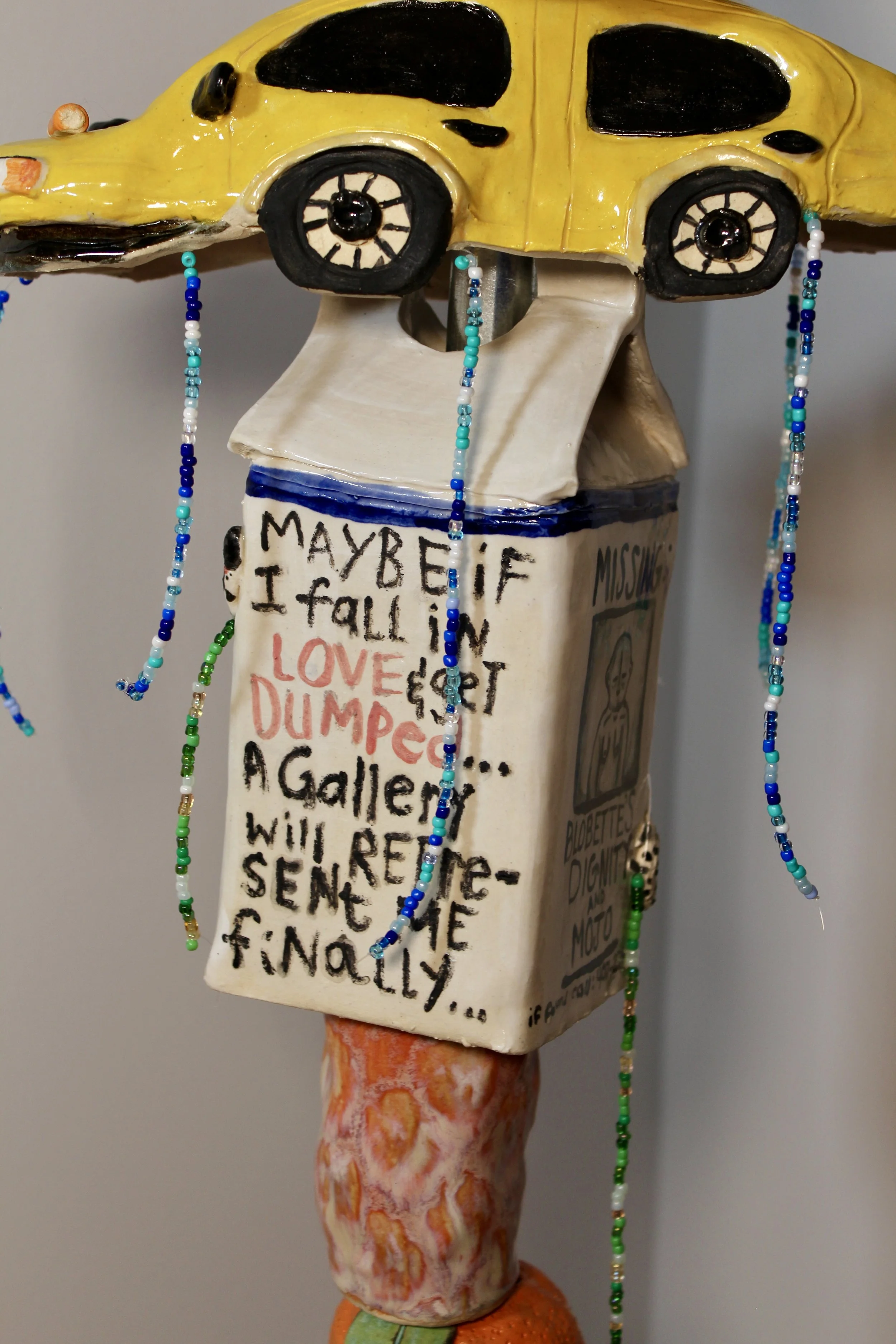
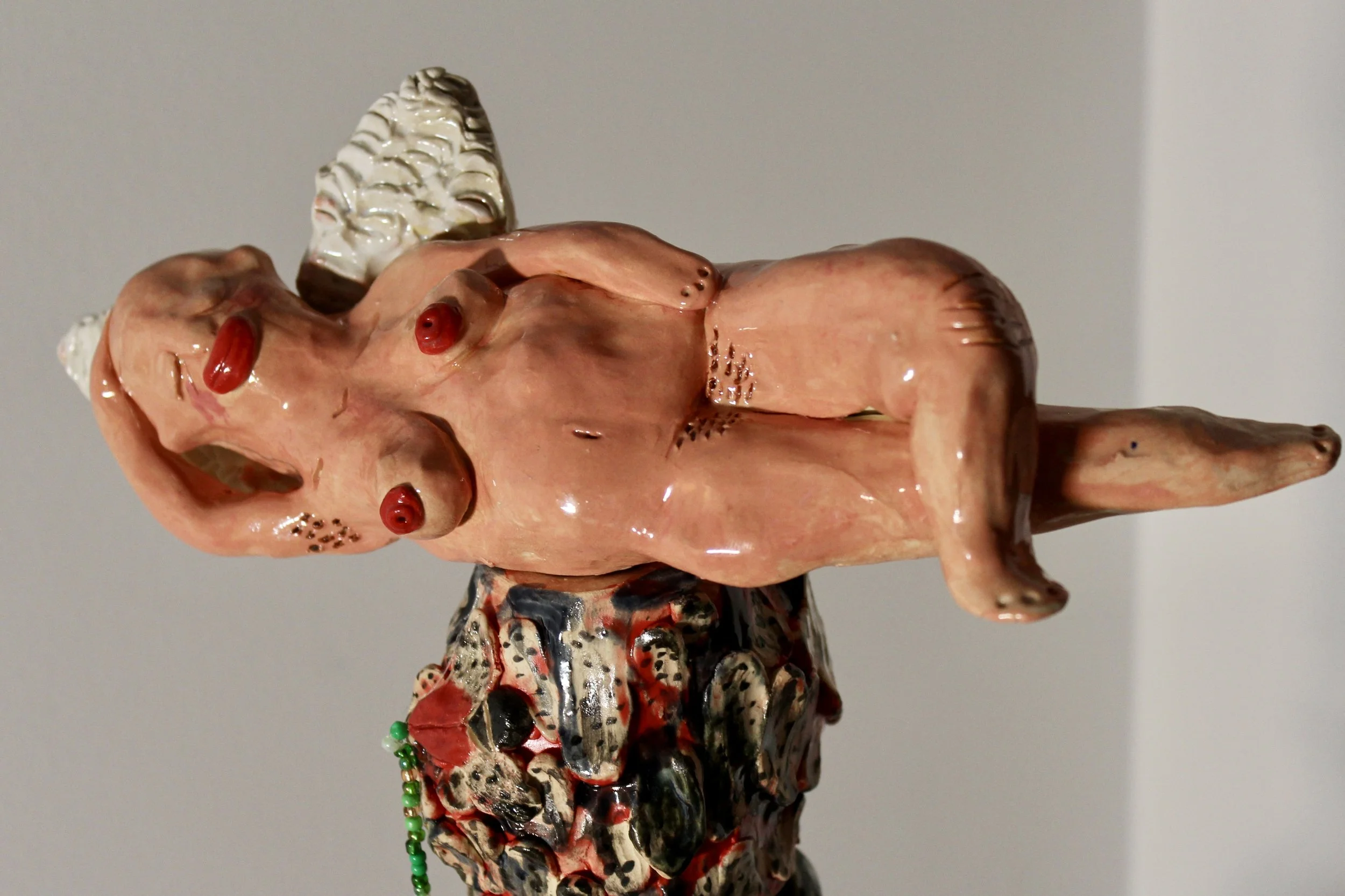
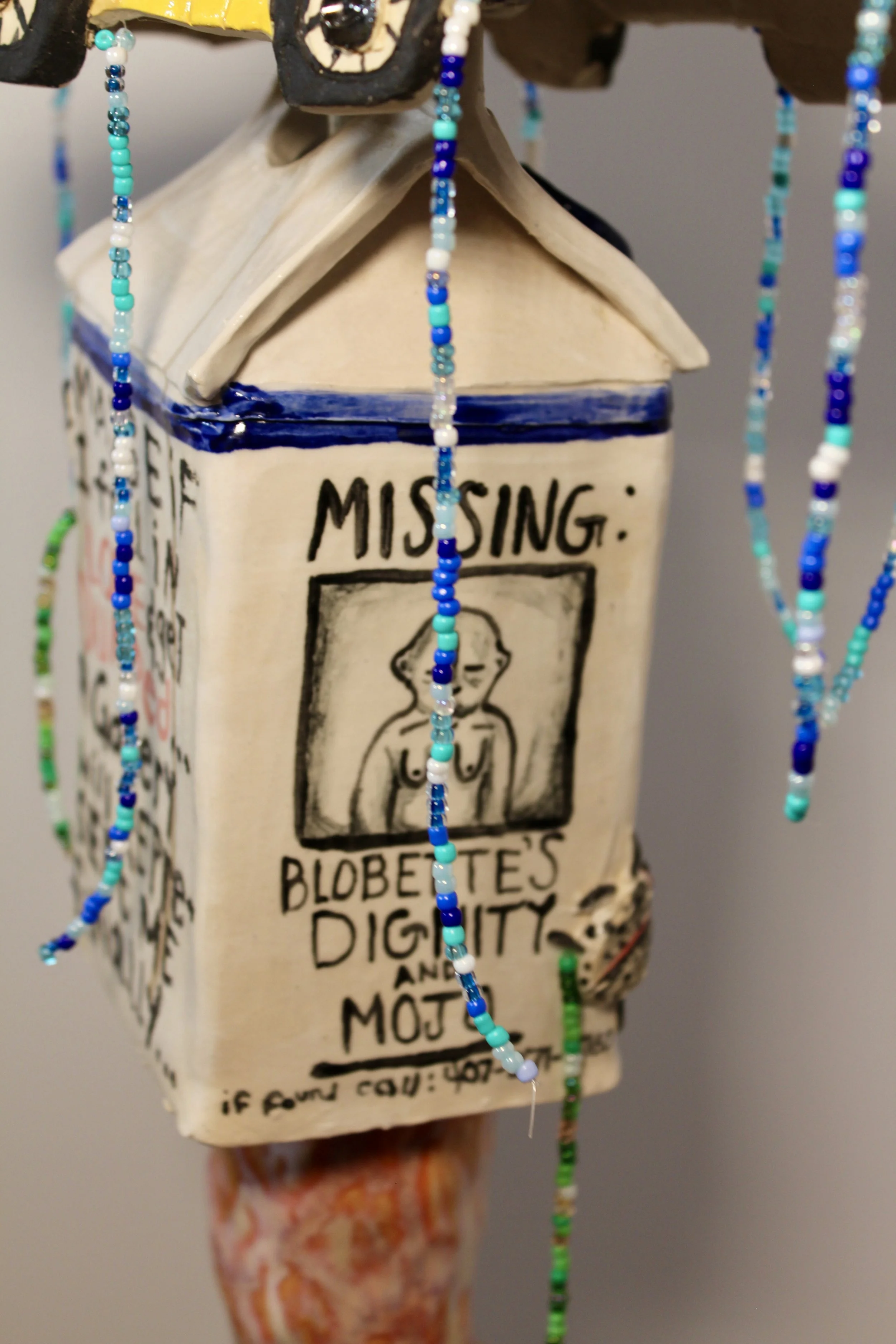
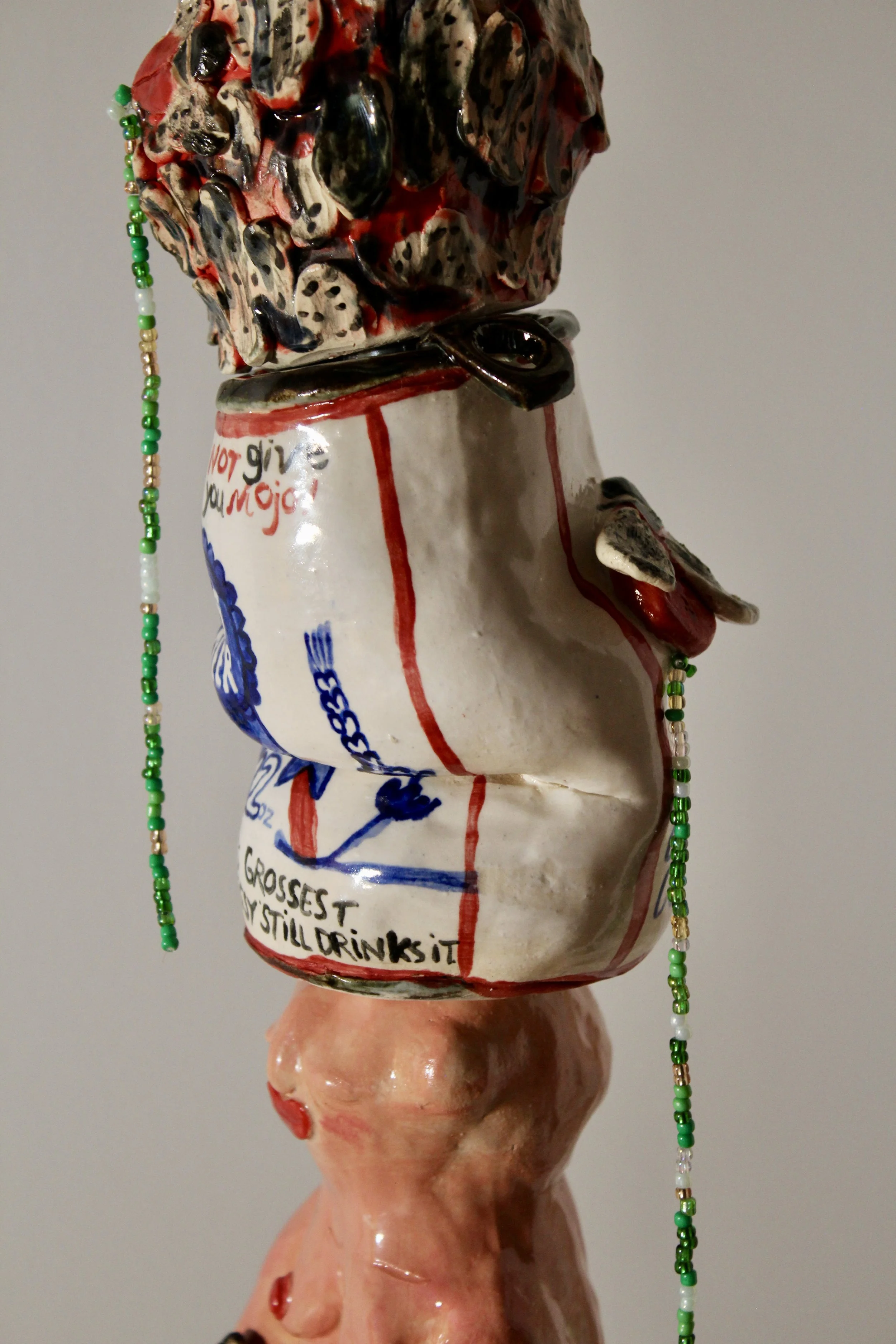
honey dew (BUGSHIT) began with a small, selfish realization: the lanternflies were getting between me and my vices.
When I learned about their appetite for grapevines and hops, I couldn’t stop thinking about these beautiful little pests interfering with my pipeline to feeling good. Somewhere between a vineyard and my next glass of wine, there was a bug having its own dinner. It made me giggle. There was something ridiculous and strangely intimate about resenting an insect for threatening the things I use to take the edge off. We were both looking for something to consume. I just had more elaborate language for why I needed it.
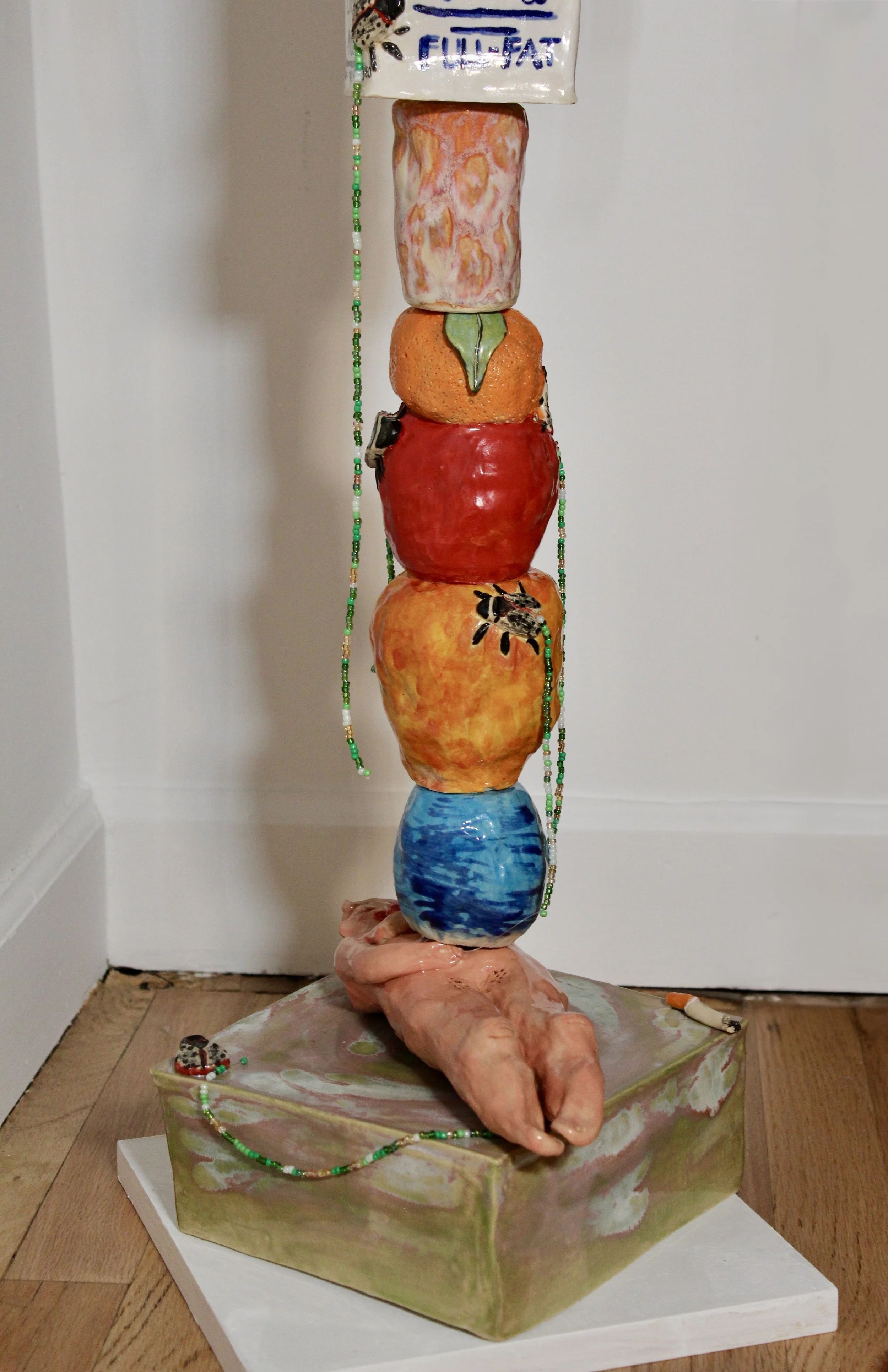
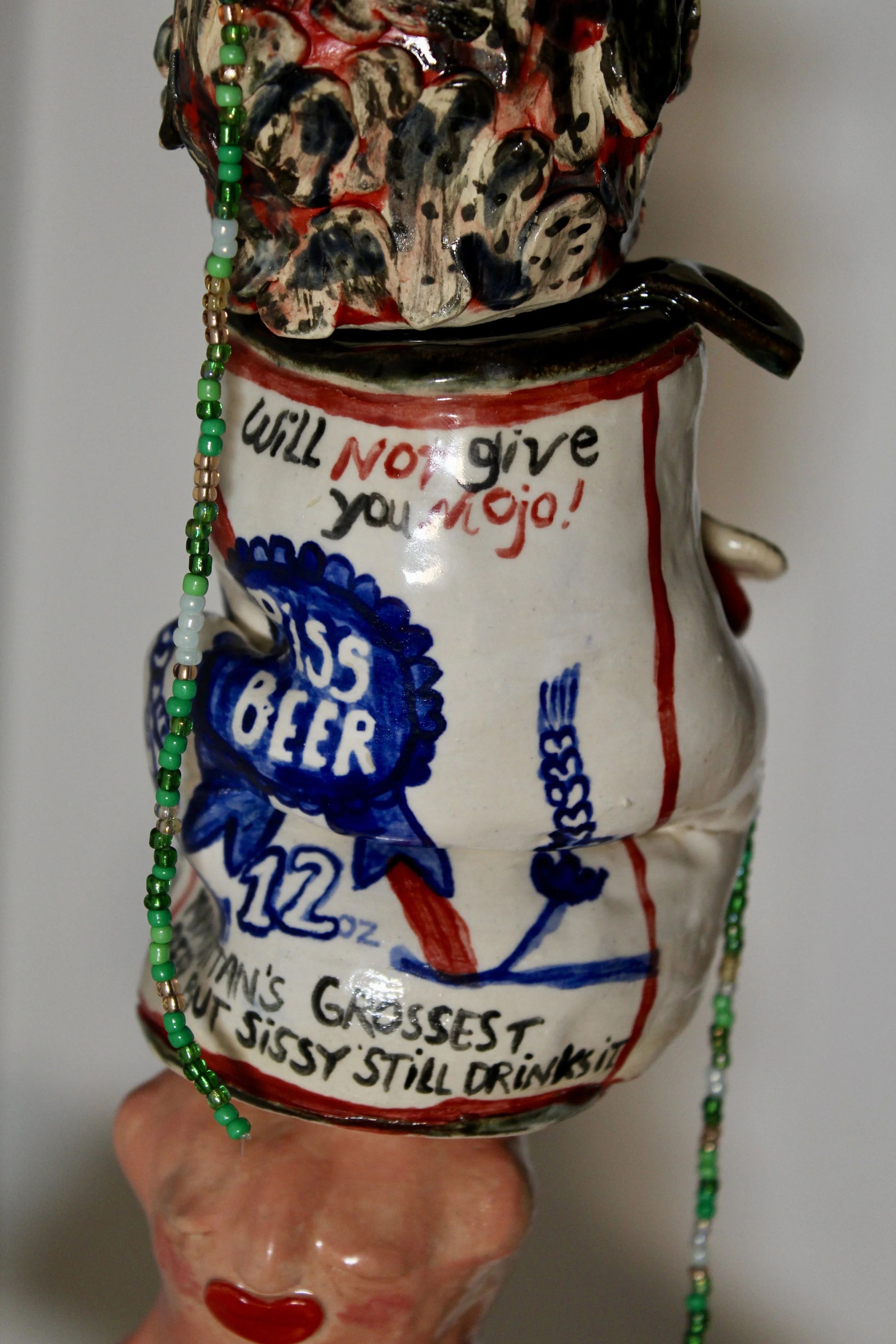
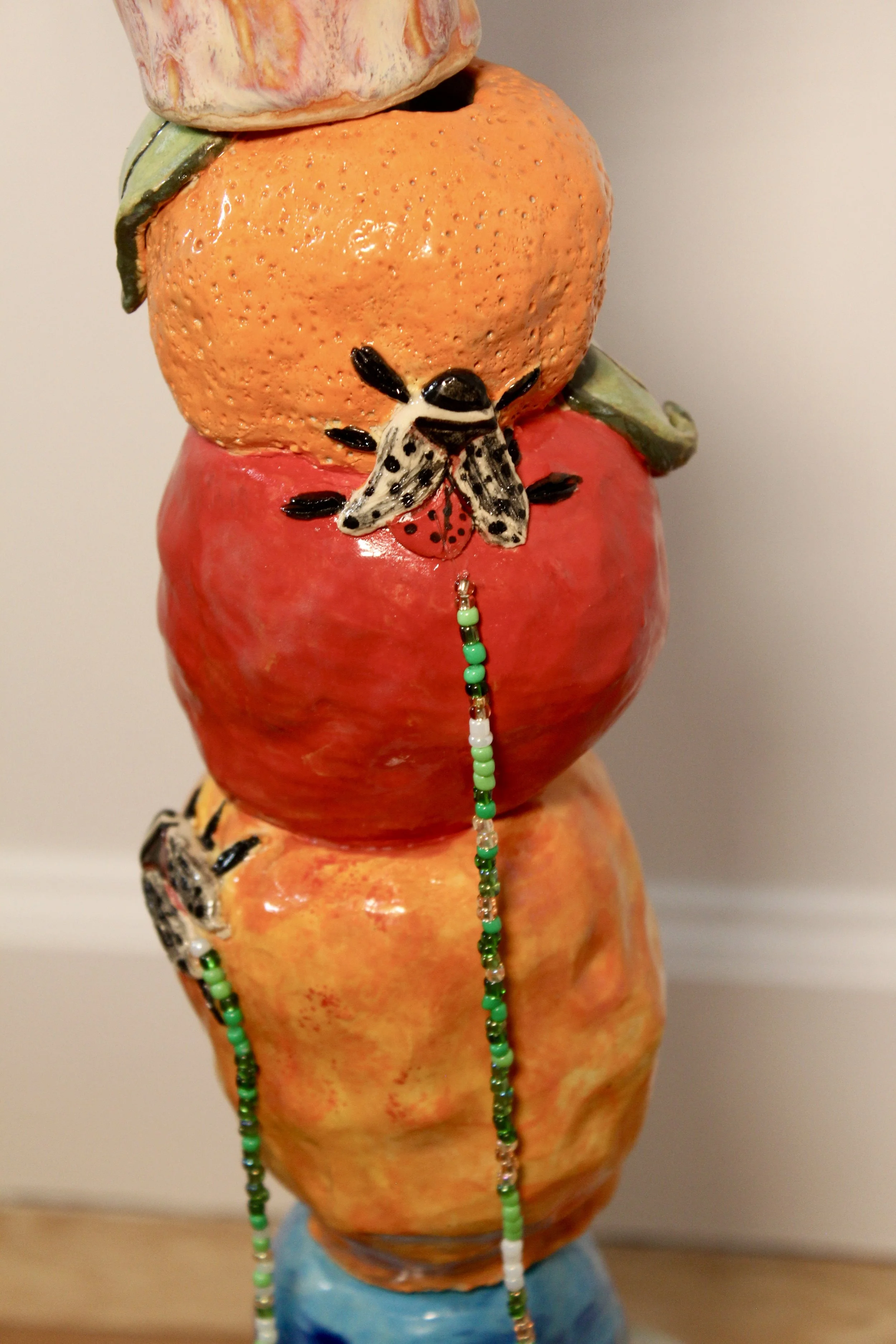
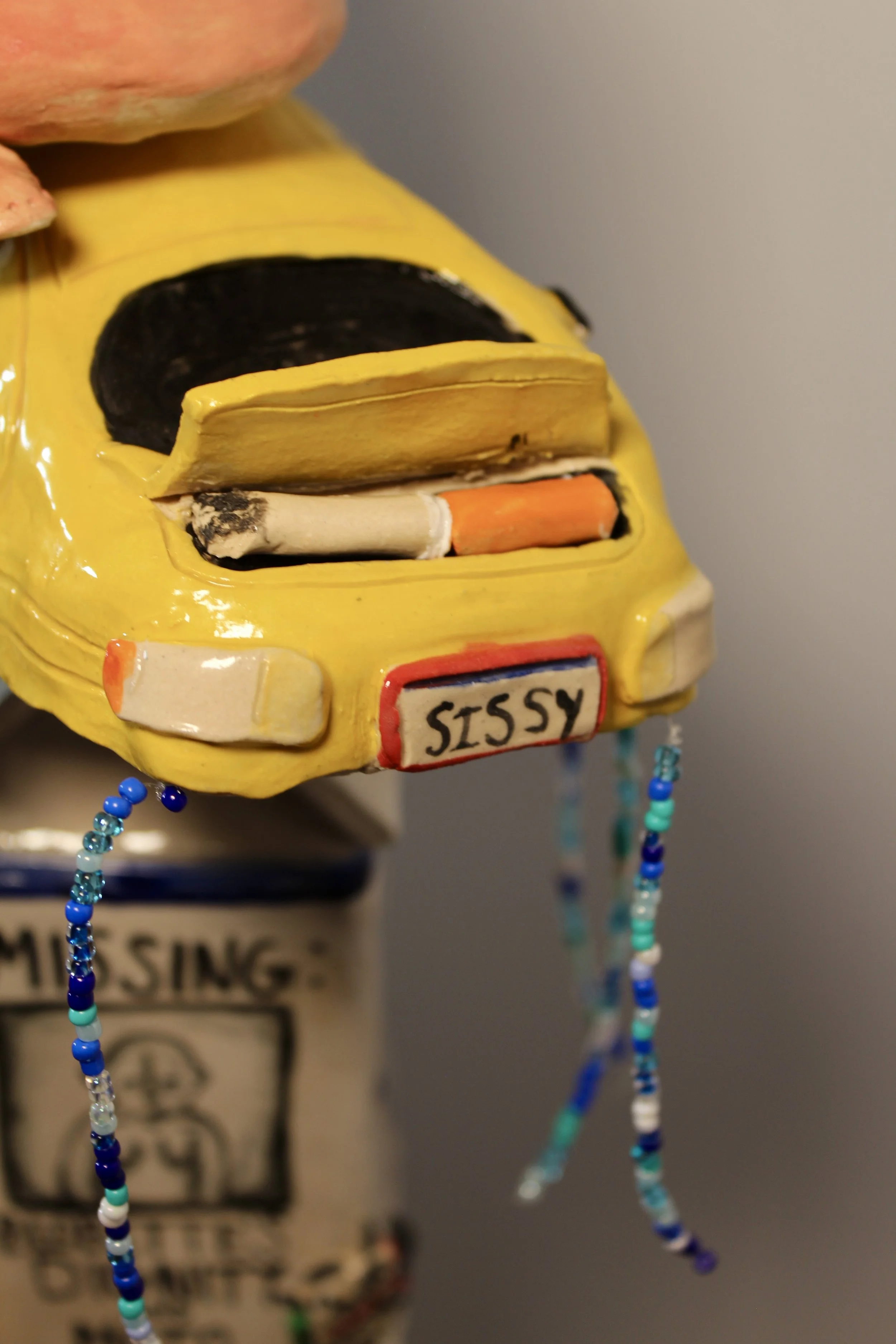
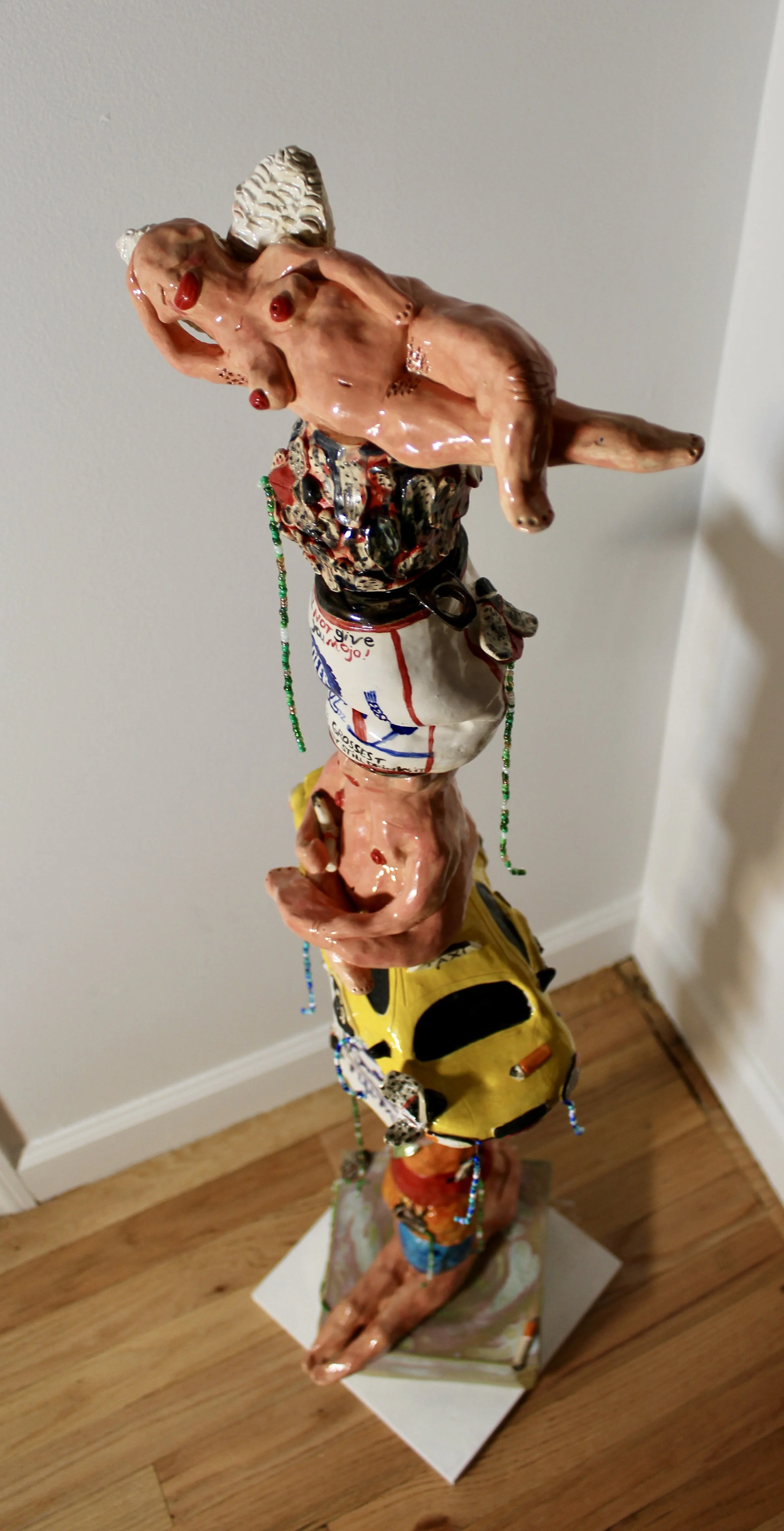
This 45-inch ceramic totem grew out of that relationship. Fruit, a milk carton, a yellow taxi, a crushed beer can, cigarettes, lanternflies, and iterations of my recurring figure, Blobette, accumulate into a stack of appetites. Familiar objects become an uneven architecture, each holding something else up. Together, they give physical form to my relationship with pleasure: the desire for it, the embarrassment around needing it, and the small negotiations I make to keep enjoying it.
I am interested in the phrase “taking the edge off.” It makes discomfort sound like something that can be neatly shaved away. A drink, a smoke, a little chemical assistance, and suddenly being in your body might feel easier. Maybe you become more social, less self-conscious, more willing to be seen. I’m drawn to the tenderness and absurdity of that desire. How much effort goes into appearing at ease? What do we reach for to feel comfortable enough to be ourselves, and who exactly are we hoping will show up?
Blobette lives inside these questions. Naked, blobby, red-lipped, and visibly hairy, she carries what I think of as “vulnerable confidence.” Her body is exposed, but her relationship to that exposure stays open. She lounges, smokes, sits, and occupies space with a casualness I find both funny and enviable. Her folds and uneven proportions remain available to the viewer’s judgment. She keeps posing anyway.
For me, vulnerable confidence means allowing the desire to be beautiful to coexist with the parts of ourselves we have learned to edit out. Blobette can be glamorous with a soft stomach. She can want attention and feel embarrassed by wanting it. Her confidence has room for insecurity, vanity, pleasure, and a little bad judgment. I recognize myself in that mixture. Through her, I can exaggerate the experience of being looked at until it becomes funny enough to look back.
The lanternfly complicates this relationship further. I am attracted to its spotted wings and flashes of red, even while knowing it as a pest. Its beauty makes my response inconvenient. I want to study it, reproduce it, decorate with it. The sculpture gives these insects room to spread across fruit, packaging, and bodies, letting their ornamental qualities become almost excessive. They belong to the visual pleasure of the piece even as they threaten the pleasures that first brought them into it.
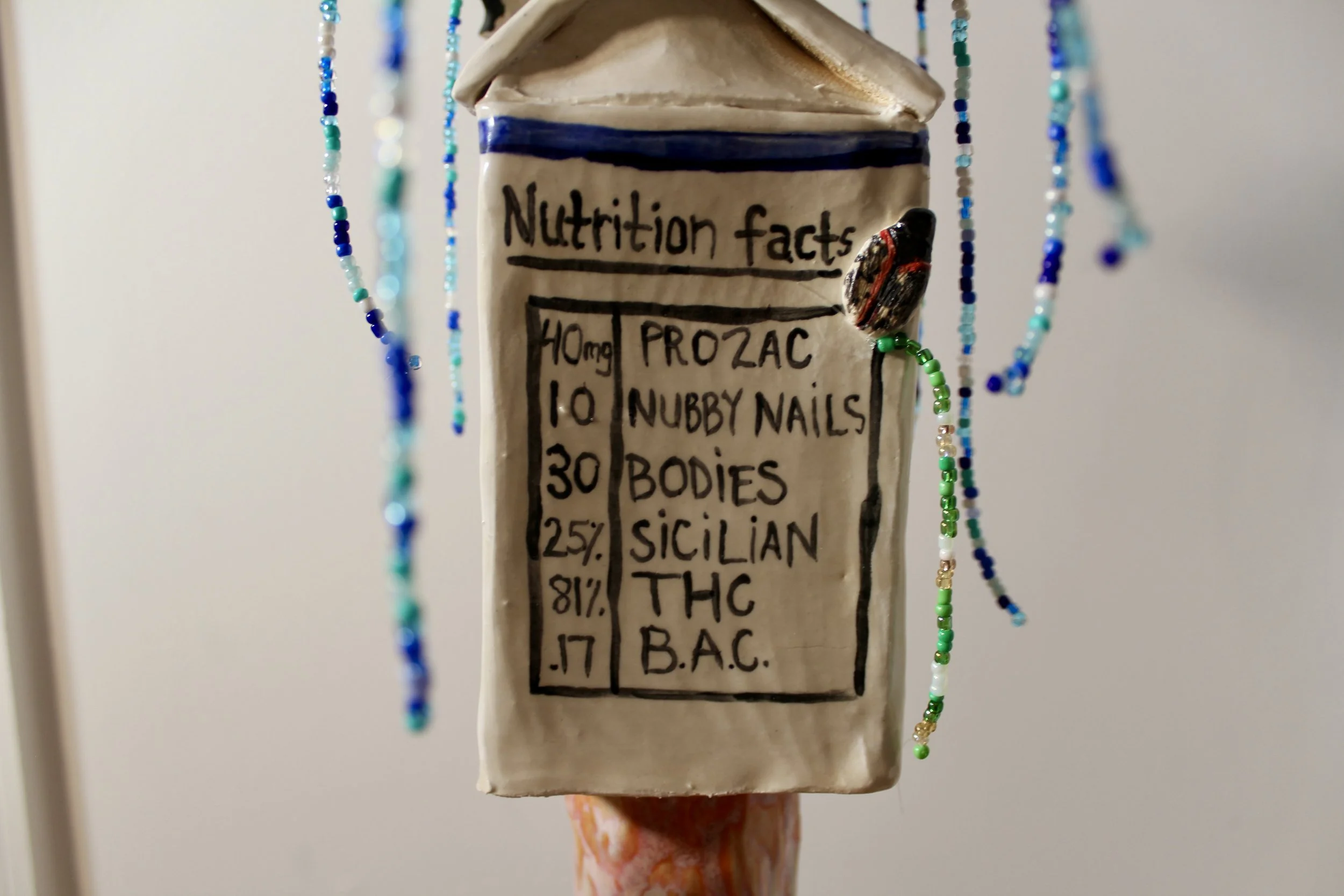
Green bead strands trail from the insects as honeydew, turning their excretion into decoration. I like the distance between those two names: “honeydew” sounds delicate, almost romantic. “BUGSHIT” interrupts that sweetness with the bodily fact underneath. Both belong in the title. The beads catch the light and draw the eye downward; something gross becomes jewelry. I’m interested in how readily a pleasing surface can invite affection, and how that affection changes once we find out what we are looking at.
The handwritten packaging brings the sculpture’s appetite back to my own. The milk carton’s nutrition facts mix bodily details, personal history, and substances into a clumsy inventory of a person. Elsewhere, Blobette’s dignity and mojo have gone missing, and the hope that heartbreak might finally lead to gallery representation becomes another promise printed on a product. These jokes let private anxieties circulate in public. A confession can sit on a carton beside a cow. A fear can borrow the confidence of an advertisement.
Humor gives me a way to stay with feelings I might otherwise try to tidy up. I can admit to wanting approval, relief, a good night out, or an easier relationship with my body without pretending those desires resolve neatly. The joke offers a moment of recognition, sometimes before I have decided how much of myself I meant to reveal.
Clay holds these contradictions in its surface. It records pressure, touch, and the unevenness of making. Glossy glaze moves over bodies and objects that remain lumpy, dented, and visibly worked by hand. The crushed can becomes permanent. The cigarette cannot burn down. Blobette’s soft body becomes something hard enough to support a stack, while remaining breakable.
At the bottom, she bears its weight. At the top, she reclines above it with wings behind her. Between these figures, the things that feed, soothe, transport, tempt, and embarrass her pile up. I like leaving her in both positions: carrying everything and looking, for a moment, as though she hasn’t a care in the world.
honey dew (BUGSHIT) holds that moment open. The bugs keep feeding. The beads keep glittering. Blobette keeps her lipstick on, with the whole ridiculous arrangement balanced around her.